
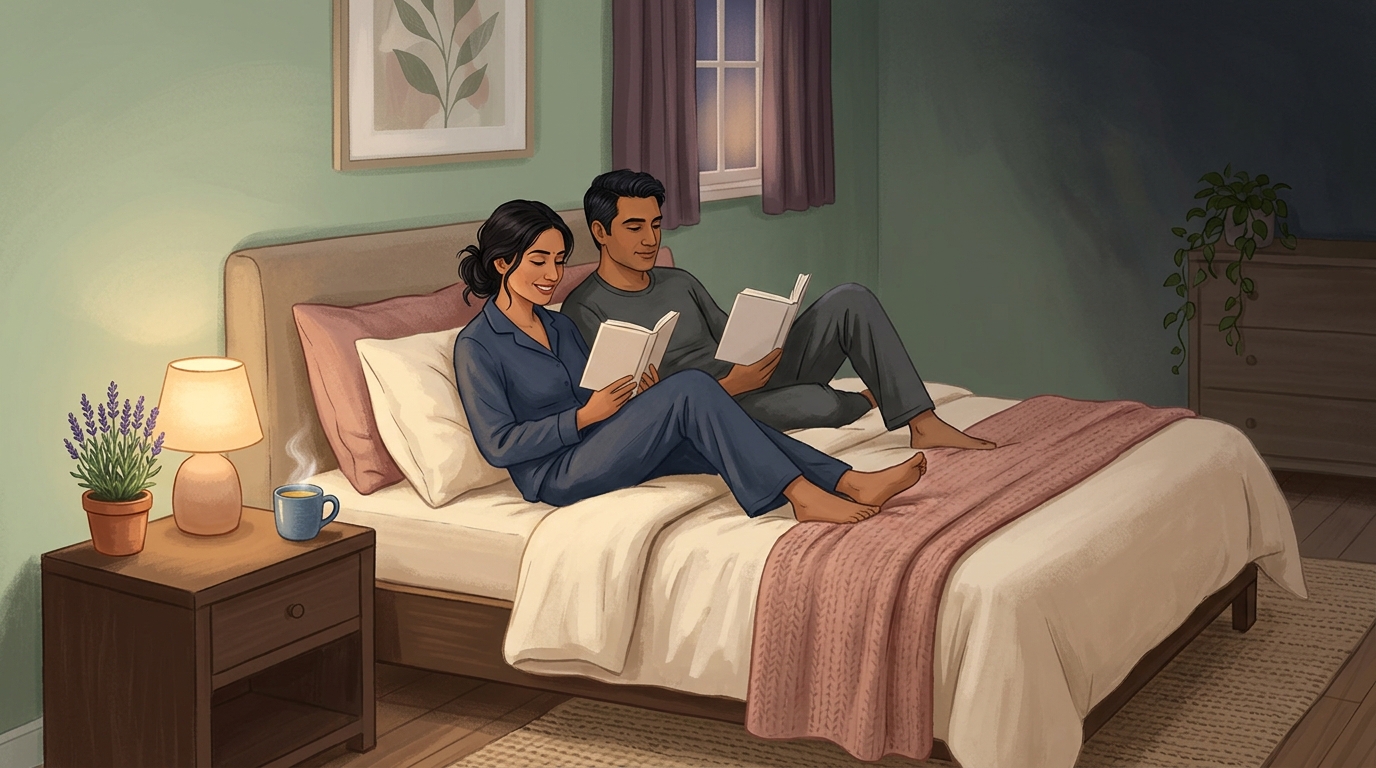
Chronic stress and sleep loss influence sexual desire through neuroendocrine mechanisms: elevated cortisol can suppress hypothalamic gonadotropin-releasing hormone (GnRH), affecting downstream testosterone and estrogen levels, while sleep debt impairs energy and mood. Supporting desire requires prioritizing 7 to 9 hours of sleep, establishing low-stimulus evening routines, and removing performance pressure from physical affection.
✦ Key Educational Takeaways
- Chronic stress elevates cortisol and adrenaline, which can suppress reproductive steroid synthesis and engage the central sexual inhibition system.
- Sleep deprivation alters endocrine balance, lowering daytime testosterone and contributing to emotional irritability between partners.
- Arousal requires parasympathetic nervous system dominance ("rest-and-digest"); attempting intimacy while in sympathetic overdrive often leads to discomfort.
- A calm evening transition (reducing screen time, warm bath, non-sexual touch) helps downregulate the nervous system and creates space for connection.
📊 Sympathetic Overdrive (Fight/Flight) vs. Parasympathetic State (Rest/Connect)
| Physiological Metric | Sympathetic State (High Stress / Low Sleep) | Parasympathetic State (Rest & Digest) |
|---|---|---|
| Dominant Autonomic Tone | Elevated cortisol, epinephrine, and sympathetic activation | Balanced oxytocin, parasympathetic recovery, and rest tone |
| Pelvic Blood Perfusion | Peripheral vasoconstriction; reduced genital vascular blood flow | Vasodilation; physiological vascular filling and lubrication transudate |
| Sexual Dual Control | Sexual inhibition system ("Brake") actively engaged | Sexual excitation system ("Accelerator") receptive to pleasant touch |
| Relational State | Guarded, fatigued, irritable, protective posture | Somatic relaxation, emotional openness, and sensory comfort |
Why Does Desire Decline During Demanding Periods?
Falling into bed after an exhausting day of work, commuting, and household tasks can leave little energy for intimacy. In relationships, this fatigue is sometimes misinterpreted as fading romantic feelings.
In human neurobiology, however, diminished libido during sustained stress is a recognized physiological adaptation. The body prioritizes immediate survival demands over reproduction. When the nervous system experiences persistent stress or sleep loss, it activates the sympathetic nervous system and downregulates reproductive drives.
The Endocrine Impact of Chronic Stress
- Cortisol and Reproductive Steroids: Sustained activation of the Hypothalamic-Pituitary-Adrenal (HPA) axis elevates cortisol, which can inhibit GnRH release in the hypothalamus and contribute to lower circulating testosterone and estradiol.
- Peripheral Blood Flow: Adrenaline promotes vasoconstriction in non-essential vascular beds, reducing genital blood flow even when emotional affection is present.
- Sleep Architecture: Sleep restriction significantly impacts daytime hormone production, including testosterone, which is essential for sexual interest in all genders.
Creating an Evening Decompression Bridge
Transitioning immediately from work screens to romantic connection can be difficult for the nervous system. Couples benefit from an intentional evening decompression bridge:
- Digital Boundaries: Step away from laptops and work messages at least 45 minutes before sleep to facilitate natural melatonin production.
- Warmth and Relaxation: A warm shower or bath promotes vasodilation and aids thermal cooling necessary for deep slow-wave sleep.
- Non-Demanding Affection: Spend time resting together, holding hands, or talking quietly without an expectation of sexual activity.
Consult a primary care physician or mental health professional if chronic stress is accompanied by debilitating anxiety, severe insomnia lasting more than a month, symptoms of clinical depression, or suspected endocrine conditions.
Frequently Asked Questions
❓ Why does stress reduce sex drive so quickly?
From an evolutionary standpoint, the body prioritizes survival over reproduction during high-stress periods. The brain releases cortisol and adrenaline, which temporarily suppress sex hormones and direct blood away from pelvic tissues toward larger muscle groups.
❓ How does sleep deprivation affect libido?
Sleep deprivation disrupts normal endocrine rhythms, including testosterone synthesis, and blunts dopaminergic reward pathways, leading to fatigue, mood changes, and reduced interest in physical intimacy.
❓ How can couples cultivate intimacy despite demanding work schedules?
Establish a gradual transition between work and sleep: set a digital curfew 45 minutes before bed, dim bedroom lights, and spend 15 minutes sharing quiet non-sexual affection to help the autonomic nervous system settle.
Authoritative Clinical & Educational References
- Leproult R, Van Cauter E. Effect of 1 week of sleep restriction on testosterone levels in young healthy men. JAMA 2011;305(21):2173-2174. — View Reference
- Kalmbach DA, Arnedt JT, Pillai V, Ciesla JA. The impact of sleep on female sexual response and behavior: a pilot study. J Sex Med 2015;12(5):1221-1232. — View Reference
- Bancroft J, Janssen E. The dual control model of male and female sexual response: A review. Horm Behav 2000;37(4):259-269. — View Reference
Private Health & Cycle Calculators
HerCare calculators run 100% in-browser with client-side zero-storage architecture to safeguard your personal wellness data.